THE RUSTY TOQUE
  • Home
    • Issue 1 >
      • Creative Nonfiction: 1
      • Fiction: 1
      • Screenwriting: 1
      • Poetry: 1
      • Contributors: 1
    • Issue 2 >
      • Visual Art: 2
      • Fiction: 2
      • Poetry: 2
      • Masthead: 2
      • Contributors: 2
    • Issue 3 >
      • Poetry: 3
      • Visual Art: 3
      • Comics: 3
      • Fiction: 3
      • Reviews: 3
      • Masthead: 3
      • Contributors: 3
    • Issue 4 >
      • Prose: 4
      • Poetry: 4
      • Reviews: 4
      • Visual Art: 4
      • Contributors: 4
      • Masthead: 4
    • Issue 5 >
      • Nonfiction Kathy Acker & McKenzie Wark
      • Drama: 5
      • Prose: 5
      • Poetry: 5
      • Film: 5
      • Comics: 5
      • Reviews: 5
      • Visual Art: 5
      • Video & Sound: 5
      • Masthead: 5
      • Contributors: 5
    • Issue 6 >
      • Poetry: 6
      • Prose: 6
      • Reviews: 6
      • Film: 6
      • Visual Art: 6
      • Masthead: 6
      • Contributors: 6
    • Issue 7 >
      • Film: 7
      • Prose: 7
      • Poetry: 7
      • Reviews: 7
      • Visual Art: 7
      • Comics: 7
      • Masthead: 7
      • Contributors: 7
    • Issue 8 >
      • Poetry: 8
      • Prose: 8
      • Visual Art: 8
      • Comics: 8
      • Reviews: 8
      • Contributors: 8
      • Masthead: 8
    • Issue 9 >
      • Poetry: 9
      • Prose: 9
      • Comics: 9
      • Visual Art: 9
      • Reviews: 9
      • Contributors: 9
      • Masthead: 9
    • Issue 10 >
      • Poetry: 10
      • Fiction: 10
      • Reviews: 10
      • Visual Art: 10
      • Film: 10
      • Comics: 10
      • Contributors: 10
      • Masthead: 10
    • Issue 11 >
      • Poetry: 11
      • Prose: 11
      • Reviews: 11
      • Visual Art: 11
      • Comics: 11
      • Contributors: 11
      • Masthead: 11
    • Issue 12 >
      • Poetry: 12
      • Prose: 12
      • Reviews: 12
      • Visual Art: 12
      • Contributors: 12
      • Masthead: 12
    • Issue 13 >
      • Poetry: 13
      • Fiction: 13
      • Nonfiction: 13
      • Visual Art: 13
      • Comics: 13
      • Reviews: 13
      • Contributors: 13
      • Masthead: 13
  • About
    • Masthead
    • Mission
    • Meet Our Editors
    • Contact
    • Chapbooks
  • Rusty Reviews
    • Rusty Recs
  • Special Features
  • On the Line

Matt Lennox: Novelist

7/15/2014


RUSTY TALK WITH MATT LENNOX
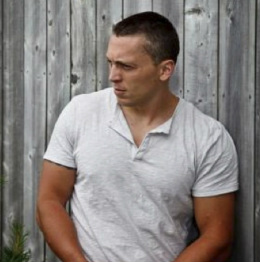
PictureMatt Lennox
Photo by John Brisbane
Born in Orillia, Ontario, MATT LENNOX first pursued a military career, becoming a captain in the Canadian army, where he was posted to Afghanistan between 2008 and 2009. He wrote many of the stories in his first collection,Men of Salt, Men of Earth, there. It was published in 2009 and was shortlisted for the 2010 ReLit Award (the title story had been previously published in Best Canadian Stories in 2006).

Alex Carey: What’s your first memory of being creative?
Matt Lennox: I don’t really know. I guess being creative—however you might define that—has been a steady-state as long as I can remember, so I can’t imagine a time when I wasn’t. There was never a lightbulb moment or anything like that. I was always a bit of a dreamer. I didn’t do well on the peewee tee-ball team because I was more interested in the different shapes the clouds resembled.

AC: You originally studied film, but you’ve since published a short story collection, Men of Salt, Men of Earth (Oberon Press, 2009) and a novel, The Carpenter (HarperCollins, 2011) What necessitated the switch the prose?
ML: I guess filmmaking necessitated too much teamwork for my kind of creative expression. And there were too many technical aspects to the craft. With writing all you really need is a piece of paper and a pen. But I was grateful for having studied film, regardless, because it helped to form the visual way I think when I’m telling a story.

AC: A couple stories from Men of Salt, Men of Earth follow travelling experiences. How influential is travel or adventure to your work?
ML: I’ve been fortunate to have done a fair amount of globetrotting in my life. Other than the specific travel stories I’ve written, I suppose that travelling has opened my eyes up to the width of the world and the people who inhabit it. Although at the same time, I’ve been continuously amazed to see the same little concerns and hopes and failures and victories, for the most part, wherever I’ve gone. People are people.

AC: Could you describe your writing process? Do you write every day? Where? When? How do you approach revision?
ML: I try to write every day. I think you have to be a bit of a hard-ass about it, while also giving yourself the occasional break. I don’t have a really formal process. Just pen to paper, repeat, and from time to time step back to see what kind of story is taking shape. I do know, a lot of the time, where the story seems to be going, so I write a lot of jot notes first. But I also stay open to a story evolving and going in different directions. That’s a vital consideration, I think. Approaching revision takes discipline, too. It also takes a special balance between sticking to your guns on things you know are true to the story, and checking your ego on things that are just junk writing or story-telling. That’s why a good, honest second set of eyes are pretty goddamn vital. I also never share anything before it’s ready, either. No sample chapters.

AC: Your novel, The Carpenter, is set in small town Ontario, in the early 1980’s; the narrative seems deliberately vague on its exact location. What roles do place and time have in creating compelling narrative?
ML: I like the disconnectedness of earlier (but still modern) times. People today aren’t so isolated as they used to be—we’re all a buttonclick away from each other now. Using that isolation was a deliberate choice I made for the world of The Carpenter. In terms of the story’s location, I wanted it to be identifiable to people from all over this province— if not all over this country—which was why I did leave it vague. Time and place are—or can be—characters in themselves, and they deserve their due consideration. But like everything else, they have to serve the story.

AC: Which writers first inspired you to create your own work? Has your view on their work changed over time? Where do you currently find inspiration?
ML: I’ve read a lot of the usual suspects for a writer like me—Cormac McCarthy, Hemingway, Raymond Carver, David Adams Richards. I wish Harper Lee had written more than she did. For the most part, my view on these writers and the others I really admire hasn’t changed that much over the years—I still feel inept beside them. But I’ve tried to broaden my reading horizons a great deal as well. Where I currently draw inspiration, to be frank, is from the new generation of writers in Canada these days. We’ve got a really exciting literary scene lately, and I’m very grateful to know a few of the best voices going.

AC: What are you working on now?  
ML: I have a new novel in the works, tentatively set for publication in early 2015. It’s called Knucklehead. Bouncers, steroids, methamphetamine, good guys, bad guys—all the kinds of things I dig. If Daniel Woodrell’s thing is country noir, I’m shooting for white trash noir.


MATT LENNOX'S MOST RECENT NOVEL
THE CARPENTER
HARPERCOLLINS, MARCH 2012

Picture
Description from the publisher:
The Carpenter is set in a God-fearing small Ontario town in the 1980s, a town rife with secrets, grudges passed through the generations and an undercurrent of criminal behaviour. Lee King, the carpenter, is returning after a lengthy stay in maximum-security prison to a community that still recalls his horrendous crime. His mother is dying, and he wants to see her and his sister Donna after so many years. But things are still not quite right in the town as Stan Maitland, the retired cop, knows. Not only does he vividly remember Lee’s unexplained violence from years before, he is also caught up in a mysterious new death. He has just found the body of a young woman, Judy Lacroix, in a car at the abandoned drive-in on the edge of town. Stan can’t help getting involved, though his policing days are long over. And what about Lee King—will he ever understand where his violent streak comes from? When Lee finally faces who he is, the lives of his family are once again overturned.

A suspenseful, darkly humorous, emotionally engaging work, The Carpenter is a powerful debut novel. Like Dennis Lehane, Matt Lennox is completely at home in the back alleys and dark corners of small-town life—and of the human heart.

Alex Carey is a contributor to The Rusty Toque.


Francisca Duran: Filmmaker

5/26/2014


RUSTY TALK WITH FRANCISCA DURAN

PictureFrancisca Duran
FRANCISCA DURAN is a Toronto based filmmaker, experimental media artist and educator. Her media arts work combines digital and analogue formats and explores the intersection points of memory, history, politics and technology. Her work has been exhibited nationally and internationally in numerous film festivals, galleries and group screenings.  She holds an MFA in Film Production from York University and a B.A.H. from the Department of Film at Queens University. Born in Santiago Chile in 1967, Francisca came to Canada as a refugee following the 1973 military coup. In addition to her art practice Francisca has worked as a volunteer in the cultural sector since 1991 at organizations such as the Liaison of Independent Filmmakers of Toronto (LIFT) and Cineworks Independent Filmmakers Society in Vancouver. She is currently on the board of directors of Canadian Filmmakers Distribution Centre (CFMDC).

Michael Vass: When did you first become interested in filmmaking? What were your first films like?
Francisca Duran: I became interested in making films at Queen’s University, which has a film studies program with some production courses interspersed throughout. It was the late 80’s, and I remember looking at a lot of Canadian and American experimental and documentary work, as well as more expressive European and American fiction films. We were encouraged to be very open in our approach to making films—I don’t remember being taught a lot of conventions to follow, or if we were, I did not feel compelled to follow any.

In 1991, during my last year at Queens, I made an experimental documentary called Tales From My Childhood on 16mm, which recounts my family’s flight from Chile after the 1973 military coup led by Augusto Pinochet that ousted president Salvador Allende. Visually the film is made up of images of daily life, mundane images of Kingston, Toronto, and a trip I took with my family to Chile, as well as optically printed found footage from the time of the coup. The soundtrack is composed of memory fragments and stories. The visual and structural style references the work of Phillip Hoffman, Ann Marie Fleming, Patricia Gruben, Mike Hoolboom, Barbara Sternberg, Midi Onodera, filmmakers whose work I was drawn to at the time. 

Tales has a companion piece, Boy, from 1999. It’s an autobiographic piece about the visual poetics of Vancouver and the birth of my first son. The film was shot on 16mm  and contains optically printed footage of Vancouver and of Jacob’s birth. I also made a couple of found footage films taken from 1980’s movies directed by women, She Was So Young Back Then and Does This Mean We Are Going Together?

My films are sometimes autobiographical documents and they always (attempt to) explore the intersection points between memory, history, and technology and how these relate to the media that represent them.

MV: What led you to make a film about Thomas Edison with Mr. Edison's Ear?
FD: I set out to make a documentary about some early wax cylinder recordings of aboriginal voices that the ROM had but that belonged to the Six Nations reserve. The ownership and copyright was being negotiated to the point that the ROM was only allowed to display the wax cylinders, not play the audio. It became clear very early on in the research that making this film in the way I wanted to was going to be very difficult because it would involve mediating interests between the ROM, the Reserve and me.

While researching the Six Nations cylinders, I investigated the mechanics and history of the early phonograph and became fascinated by the simplicity of that machine. I am always interested in the tactile qualities of media that are thought of as ephemeral, and I want to give a graphical representation to what is perceived as invisible, for instance, light, sound and memory. Edison was actively involved in the development of early sound recording technology. While the history of the phonograph of course extends far beyond Edison, he does hold the first patent. I learned that Edison was (mostly) deaf and that became an important emotional through line for an exploration of the phonograph or for the impetus to capture sound, that Edison wanted to hear so he develops a way to hear (and to try to ruthlessly control the political economy of recorded music and possibly the world).

MV: What was the most surprising thing you discovered in your research?
FD: I keep coming back to the early paper film prints that the Edison Company made as a way of copyrighting those works. They are beautiful. I love that when these films are restored some of the “originals” are paper.

MV: Mr. Edison’s Ear is composed of numerous different formal elements--interviews, archival footage, archival sound recordings, animations, Edison’s diary writings. What was your process like as you assembled all of these elements?  
FD: I made the film over three years, and I did not work from a script but rather from a series of idea-threads, which would have their own visual or aural treatment, and included animation techniques, layering, optical printing etc. Eventually these components were structured into a finished movie. 

I think of Mr. Edison’s Ear as a bit of a ghost story. There are over 5 million pieces in the Edison archives. When I was making the film, I would imagine Edison wandering among these archival bits, picking them up, revisiting them, contemplating the bad (and good) he might have caused as he helped to usher North America into modernity. This thought helped me to shape the film.

Almost everything in the film has been downloaded from Internet Archives. I spent a lot of time looking at, reading and listening to archival material and also contemplating the technical make-up of the original, and of the archival “copy”.

The interviews with theorist, Lisa Gitelman; sound archivist, Robert Hodge; and scientist, Kenneth Norwich were shot on video and then filmed off the screen onto black and white 16mm or de-saturated to give them an archival feel.

The animated type sequences are excerpts are from a book I found called The Diary and Sundry Observations of Thomas Alva Edison. Apparently, this book is regarded as being marginal and irrelevant by Edison scholars.


Notes on Mr. Edison’s Ear – Proof
By Franci Duran

The video establishes the following:
1. Thomas Edison is deaf.
2. Thomas Edison wants to hear
3. Thomas Edison’s desire to hear led to the invention of the phonograph.


And,
4. Edison is a capitalist.
5. Control over sound establishes mastery over technology and commerce.


If we associate these,
6. Edison’s desire to hear is about regaining his body.
7. Control over his body is manifested by his efforts to capture and control sound.


And if we admit a measure of madness,
8. He wanted to take over the world.

MV: One aspect of the film that I find interesting and effective is its complex, multilayered tone. On the one hand, it is an essayistic and informative exploration of Edison as a man and inventor. This part of the film is expressed mainly though language—verbal (interviews) and on screen text (Edison’s diary). However, just beneath this surface is a murkier, more disturbing tone, which is not discussed directly for the most part but rather comes through in the atmospheric qualities of certain sounds and images, such as the uncanny insect animations and the eerie quality of some of the archival recordings and film footage.

This darker element comes to the forefront in the final scene, which shows the Edison film of the “man killing” elephant being electrocuted. It’s a brutal and disturbing ending, made all the more haunting by the fast that you decline to comment on it directly within the film. Can you talk about achieving this mixture tones, and can you comment on the choice to end the film with the elephant?
FC: I needed to convey specific historical, theoretical and technical information, and that is what the interviews do. The diary sections are my attempt to give Edison a kind of poetic or reflective inner life. The original book text was very wordy, and often humorous, more like the writing of Mark Twain. These type sections in the movie have been radically distilled, and I took many liberties when I edited it down. Theorist, Lisa Gitelman, told me The Diary and Sundry Observations of Thomas Alva Edison by Dagobert Runes can’t accurately be called Edison’s diary entries, rather they are a series of written observations made while Edison was on vacation in 1885. Edison didn’t keep a diary, except for the texts in Runes' collection, although apparently he did write many notes in the margins of his books. Much of the “information” within the observations is discounted by historians. Their “marginality” is exactly what drew me to them. The material was very different from other material I was looking at.

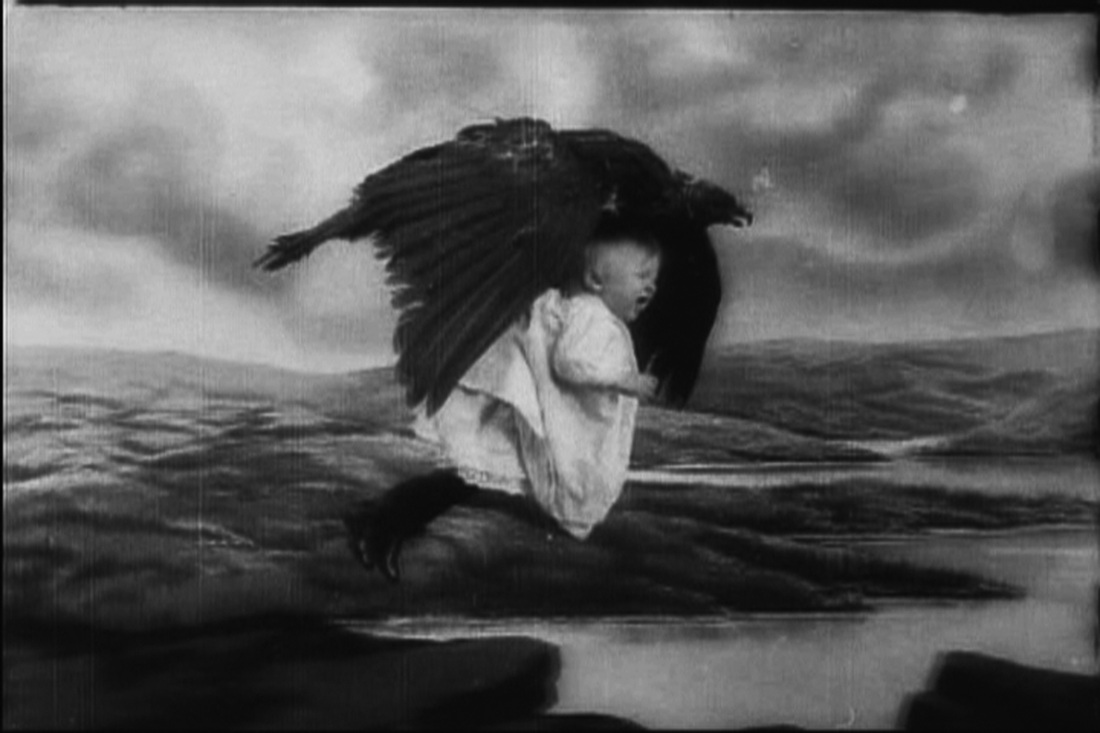
I love elephants. They have rich and complex social relationships and rituals within their herds, and very long memories. They are also physically large, heavy, and I think they move beautifully. Electrocuting an Elephant (1903) is a documentation of the execution of Topsy the elephant on Coney Island. Topsy was executed because she had killed one of her trainers and seriously injured at least one other. Topsy had been abused during her life in captivity and consequently mistrusted humans. Edison suggested that electrocuting Topsy was an efficient alternative to other methods suggested (such as hanging). Conveniently for Edison, it allowed him to prove the efficacy of his AC distribution system over his competitors (mainly Westinghouse I believe), and this is why the execution was filmed.

I wanted the ending to be "open" but I am always asked why I did not contextualize this footage, so perhaps it is too open. Metaphorically it functions as symbolic of the collateral damage of progress, of our entry into the modern condition, of the price of progress, the death of an era. It is also a tribute to Topsy, and to all the creatures and categories of people considered lesser by the people behind power structures, those making choices, decisions and how those decisions affect other beings.

The insects and animals represent that marginality that exists and rises to the surface anyway despite dominant discourses and power structures. An obvious analogy would be tiny plans that grow out of cracks in concrete surfaces. In addition to making a film about the emergence of early sound technology, I was interested in exploring what lies behind the desire to control nature, time and space (physical spaces). The mid 1800 to early 1900s was a time of great change, and transformed people's internal maps, the way people conceived of space and time and themselves within time and space.

MV: What are you working on now?
FD: I am finishing up a one year contract as Education and Outreach Coordinator at LIFT (the Liaison of Independent Filmmakers of Toronto) and working on two projects:

Cold Food is an expressive documentary anchored around a book of poems written by my father, Claudio Duran, which was published by poet bp Nichol's press Underwich Editions in the 1980's. The film explores poetic typographic forms, the history of the representation of downtown Toronto, and the limitations of translation. Cold Food is a visual and aural collage consisting of hand-drawn illustrations, type, archival maps, original footage shot on 16mm and HD, archival recordings, sound composition and original interviews.  (In post-production)

AK47 is the fourth film in a series, “Retrato Oficial”, all based on the legacy of Chile's former dictator Augusto Pinochet. The works are constructed entirely of archival elements including declassified CIA telegrams, found footage audio and images. This component explores the stories that surround the AK47 that was given to Chilean president Salvador Allende by Fidel Castro, and which Allende used to commit suicide on the day of the 1973 military coup. (In development)


MR. EDISON'S EAR BY FRANCISCA DURAN
32 minutes / experimental documentary, animation /16mm, DV / 2008
WATCH THIS FILM IN ISSUE 6 OF THE RUSTY TOQUE

Picture

Michael Vass
is a regular contributor to The Rusty Toque.

Glenn Patterson: Novelist

5/24/2014

 
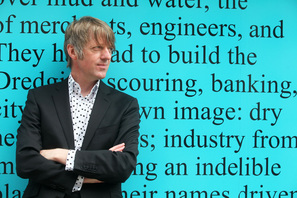
PictureGlenn Patterson
Photo by Belfast City Council
GLENN PATTERSON is the author of eight previous novels, the most recent of which, The Mill for Grinding Old People Young, was the 2012 One City One Book choice for Belfast. He is the co-writer of Good Vibrations (BBC Films/The Works), an award-winning movie based on the life of Belfast punk impresario Terri Hooley. He is currently at work on a novel set in the DeLorean motor plant in the early 1980’s; a related screenplay has already been commissioned. He lives in Belfast.  

RUSTY TALK WITH GLENN PATTERSON

Catherine Graham: You recently completed a writer-in-residence post at the University of Toronto Celtic Studies department. During your public reading at St. Michael’s College, you mentioned the influence poets have had on your writing, poets like Seamus Heaney and Louis MacNeice, for example. Can you tell us more about the influence of poetry/poets on your work? Have you ever thought of writing poetry?
Glenn Patterson: Something happened to me the day (I was in school) I first read ‘Snow’ by Louis MacNeice. I won’t say it changed my life, but it definitely changed my posture. I sat up straight in my seat (I was a notorious sloucher). I said to the teacher, ‘I get it’–I think we were peeling and portioning the tangerine and spitting the pips, feeling the drunkenness of things being various–‘I really get it’. I didn’t mean, or only mean, the lines themselves, I meant the whole poem, the purpose of poetry, even. I fancied for a few years afterwards this meant I was destined to be a poet myself and modelled myself on Dylan Thomas, or at least on the photo of him of another book we had at school, the Dent edition of the Selected Poems. Mainly I modelled myself on his hand holding a cigarette. I told everyone–between puffs–I was a poet, I told them I was starting a poetry magazine–the Alternative Duck– but the only thing I wrote was a poem that still another teacher suggested I show to the poet Frank Ormsby, who did edit a magazine–The Honest Ulsterman–and who told me that whatever else I was going to be I wasn’t on this evidence going to be a poet myself. There was one further poem–twenty years later–about the Christmas lights in Cork. I’m still working up the courage to show it to Frank.

CG: Belfast has played centre stage in your writing, from your first book, the coming-of-age novel, Burning Your Own, to your most recent publication, a historical novel, The Mill for Grinding Old People Young. You’ve also been quoted as saying, “Belfast is my city … where my imagination is most alive.” What is it about Belfast that inspires you?
GP: It’s curious, it doesn’t strike me as at all controversial, or even exceptional, that a writer who has spent the larger part of his life living in a particular place should choose to set most of his fiction there, but maybe that’s me protecting myself from the truth that my imagination is too dull to produce stories set elsewhere. Even when I went to EuroDisney with one novel (Black Night at Big Thunder Mountain) I took a Belfast character with me. When I went to Hiroshima for another one (The Third Party) I took two. I take the bus a lot here. I look out the window. I daydream, I tell myself stories about the people I see. There is a political point to it too, a phrase I object to, much used by politicians here (and elsewhere, I am sure): ‘the reality is’. No it fucking isn’t.

CG: Did writing a historical novel pose new challenges for you as a writer?
GP: I stumbled into writing The Mill for Grinding Old People Young. I came across an inn of that name in a history of Belfast and realised the woman who ran it in the early 1830s, Peggy Barclay, had been prominent in the life of the town (as it was then) thirty years earlier at the time of what was known as the United Irishmen’s Rebellion. I did the thing that all of us–writers and non-writers– naturally do: I tried to imagine her journey from one stage of her life to the other, and before I knew it I was finding other fragments of story that seemed to fit with it. The only thing that made me hesitate before saying, even to myself, that this was a novel I was beginning to write was the voice. I couldn’t work out how to ‘do’ the 1830s, or rather work out how not to overdo them. In the end I adopted the model of the text where I had first read the inn’s name, which was the recollections of an elderly man looking back from the end of the century to his childhood and youth. My own grandparents, on my father’s side, were born in the 1890s. My other grandmother, born in 1911, was still alive when I started the book and used phrases that she had got from her parents, born in the 1880s … It was only a hop, skip and a very small jump away. That gave me the confidence I needed. That gave me Gilbert Rice.

CG: Your books often come out within a few years of each other. Do you work on multiple projects at the same time or stick to one project until it’s complete?
GP: The most recent book, The Rest Just Follows, was published here in the UK and Ireland in February. That was my tenth (one was a memoir) in twenty-six years, so they come about once every two or three years. I write best in the early months of the year–best of all in January–a hangover perhaps from my days teaching full time at Queen’s University, when I tried to cram in as much writing as possible between the end of the first semester’s teaching and the start of the second. Nowadays I only teach part-time, supervising Creative Writing PhD students, but one of the reasons behind that move was to try to give myself time to write screenplays, which I had started to do, and which, with writing novels and teaching, felt like one job too many. So I teach less, write more, and still find myself devoting the same amount of time to the novels., although where possible, when I sit down at my desk in the morning it is the novel-in-progress that I sit down to. I have one particularly gloomy writer friend who is in the habit of saying of the onset of the summer holidays ‘the year might as well be over now’, and I sort of know what he means. Even as I am booking flights I am thinking about January again.

CG: What is the best piece of writing advice you've been given that you use?
GP: Aside from Frank Ormsby’s? I collect–store away–other writers’ thoughts and reflections on their craft. I remember a few years ago reading an interview with Eoin McNamee, a contemporary and friend, in which he said that there was no corner you could write yourself into that you couldn’t write yourself out of again. That’s one I try to bear in mind on those days when I feel like hitting my head against the desk.    

CG: What is your favourite or funniest literary moment?
GP: A writer walks into a bar … Every twenty seconds, somewhere in the world: a writer walks into a bar …

CG: Your next novel will be appearing soon. Could you tell us more about this work?
GP: The Rest Just Follows takes its title from a line in Tracey Thorn’s memoir, Bedsit Disco Queen to the effect that when you are growing up in ‘somewhat limited circumstances’ the people you meet are just the people you happen to meet and all the rest follows. It captures perfectly the idea I had for the book that it would take three characters, coming to adolescence, and awareness, in 1970s Belfast and see what followed as a result of their happening to meet in the particular limited circumstances of that place and time. In many ways their lives are no different to someone like Tracey Thorn’s, growing up twenty miles north of London: they yearn for experience, to be wherever the centre is … and then, stuff happens.
_____I should be a salesman: ‘stuff happens’.
_____Stuff does, though. Stuff tends to. Stuff of life.
_____Then you’re fifty, which is where the book leaves these three. Not young, but not old, not to themselves. And still here.


Picture
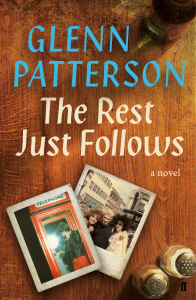
GLENN PATTERSON'S MOST RECENT NOVEL
The Rest Just Follows, Faber and Faber, 2014

Description from the publisher: 
A charming coming-of-age novel set in 1970s Belfast, from the writer Will Self calls ‘Northern Ireland’s prose laureate.’ Glenn was nominated for a 2014 BAFTA (Outstanding Debut) for Good Vibrations, a screenplay co-written with Colin Carberry.

First of September 1974. Craig Robinson is starting secondary school. Instinct tells him he needs to keep his head down. The last thing he needs, therefore, is someone carrying the name St John Nimmo to be sent to sit beside him, but that is what he gets.  Across town Maxine Neill is starting her own new school, convinced that she shouldn’t be there at all. She should be where Craig and St John are. Not that she has met either of them yet. Though meet them she will, and more. Their lives and hers–and the lives of the entire Nimmo family–become entwined as pre-teens turn to teens, turn to twenties and thirties, turn inevitably to the eff decades and they go about the business of filling the spaces vacated by the generations that went before. It’s called growing up, never mind that most of the time it feels like making it up as they go along, and sometimes like fucking up completely. Around them meanwhile the world happens: to be specific Belfast happens, for good or occasionally very ill indeed. These are the circumstances life has contrived for them. What are they to do but deal with it?

‘A subtle and compassionate look at the people and places that shape us, and the moments that can alter the course of a life, or lives, forever.’
–Lucy Caldwell


EXCERPT FROM THE REST JUST FOLLOWS


1
From ever he could remember Craig had had the feeling that his life was somehow being watched and weighed. Nothing happened by chance. That woman who sat down across the aisle from you on the bus and started talking to your mum about the holidays and were you getting away anywhere nice yourself was not a random stranger but a spy. The conductor too: ‘How old is the wee lad? Over five?

That’s a half then.’

When people he did not know turned up at the door–and there being no phone in the house in those years people had a habit of just turning up: second cousins once removed, old neighbours of his parents, returned from Canada or Australia, or so they said–Craig would hide in his room, sometimes under his bed.

‘He’s a wee bit shy,’ his mum said and he was happy to let her think it.

There was a programme on the TV, the Christmas after he turned seven, bigger boys and girls talking about school and pocket money and what they wanted to be when they were older, all stuff like that. It showed them too when they were the same age as him and it was strange that some of the things they said back then seemed to know the teenagers they would turn out to be, almost like the second bit had come before the first.

It was hard to explain.

Craig’s mum tutted. His dad put down the paper. ‘What?’

‘Listen to those voices.’

‘What’s wrong with them?’

‘What’s wrong with them?’ That was the way his mum and dad talked: one said something and the other said it back and added something of their own. ‘They’re all English.’

‘So?’

‘So you’d think sometimes we didn’t exist. No one ever comes near us.’

‘Do they not?’ His dad said it like he knew the answer and it wasn’t one his mum thought.

His mum tutted. Craig wondered. About women on buses and second cousins once removed and whether one day it would be him sitting there in the box in the corner of the living room, bigger and uglier as his granddad would say, plucking at his trousers, trying to account for himself.

‘Quiet boy,’ his teacher wrote on his end-of-year report.

‘You would hardly know he was there.’

***

Maxine Neill’s teachers vied with one another year on year to sing her praises. ‘A joy to teach . . . sets the standard for others to aspire to.’

Mr Jackson who had her in P5 and who had taught Victor and Tommy before her told her, between him her and the gatepost, that it was easy to see who had got the brains in the family.

The headmaster had had to cane Tommy one time in front of the whole school for writing a bad word on the door of a cubicle in the boys’ toilets. Tommy said it wasn’t him, swear on the Holy Bible, but nobody believed him. Nobody ever believed Tommy. He had one of those faces.

Maxine was only in P1 then. She wasn’t able to see because of the heads in front of her, but she heard the swish of the cane–one, two, three, four, five, six times.

Tommy came into the box room that night after she had had her tuck-in and told her she wasn’t to listen to what anybody said, he didn’t cry. All right?

He didn’t cry.

Maxine looked out from under the covers into that face of his. Said nothing.

Julie Bruck: Poet

3/14/2014

 
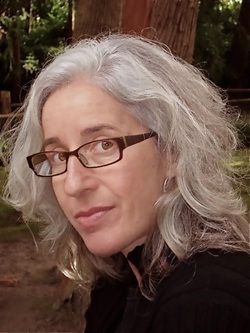
PictureJulie Bruck
Photo by Kara Schleunes
JULIE BRUCK is the author of three collections of poems from Brick Books: Monkey Ranch (2012), The End of Travel (1999), and The Woman Downstairs (1993). La Singerie, William S. Messier’s French translation of  Monkey Ranch, was published in 2013, and is available from Les Editions Triptyque. Her awards and fellowships include, Canada’s 2012 Governor General’s Literary Award for Poetry, The A.M. Klein Award for Poetry, two Pushcart Prize nominations, Gold Canadian National Magazine Awards (twice), a Sustainable Arts Foundation Promise Award, as well as grants from The Canada Council for the Arts, and a Catherine Boettcher Fellowship from The MacDowell Colony. She lives in San Francisco’s foggy Inner Sunset district with her husband, the writer Lewis Buzbee, their daughter Maddy, and two enormous geriatric goldfish.

RUSTY TALK WITH JULIE BRUCK

Tom Cull: What is your earliest memory of writing creatively?
Julie Bruck: When I was quite little I wrote a rhymed poem that began, "Nonsense is so many things,/ bats with hats and cats with wings." My mother made a huge fuss over it, but I wasn't as impressed. I never really felt engaged by writing as a kid. I preferred drawing, or being outside--preferably with live, rather than imaginary animals.

TC: As a child, did you read poetry? Was poetry a part of your childhood?
JB: Poetry was read aloud in our home, and valued. My mother wrote poems and studied with Irving Layton, and went on to publish her first chapbook in her mid-80's. My father liked to quote Ogden Nash and lyrics from Gilbert & Sullivan. There was a lot of word-play in the house. My two older brothers tortured me with names I didn't understand, like "perpetrator of arm-chair methods" or "petit bourgeois scum." Eventually, the dictionary became a survival tool.

TC: How did you become a writer?
JB: I wasn't drawn to writing until my early 20's. I was studying photography and art history and took a fiction workshop at Concordia University as an elective. My stories were awful, but that class woke me to the kinships between poetry and photography, especially how both were a matter of framing, and how crucial the placement of that frame could be. That fit with my way of seeing the world. I was really adrift at that time in my life, and I think that process offered an illusion of order. It also made my work too drum-tight and over-determined, but there would be time to work on that later.

TC: You were born and raised in Montreal but now live in San Francisco. How has this transplant affected your poetry?
JB: My relationship to home was always hyphenated, especially as an Anglo in Quebec, so being a Canadian in the U.S. felt oddly familiar. I think becoming a mother at 41 was the bigger shift, and certainly one that had an effect on my work. As a parent, it's harder to draw lines between what's personal and what transpires in the larger world. The traffic between those two realities figure in my writing.

TC: Your website describes you as both “poet and teacher.” Can you talk about the relationship between writing poetry and teaching poetry?
JB: Much of my teaching focuses on generating new work, and I emphasize the importance of surprise in the writing process, as well as during revision. The bold examples of my students help keep me honest. They are almost always receptive to trying new strategies and approaches. They remind me to practice what I preach, and I'm grateful for it.

TC: Can you describe your writing process? How does revision figure into the process?
JB: While most first drafts come quickly and freely, I am glacially slow from that point on, and can spend years on a poem before it's either ready to leave the house, or be consigned to a dusty folder. Revision is crucial and I print every draft. I am not, alas, good for the forests. So often though, the most creative moments take place during re-writing, even years after the rush of a  first draft. Sometimes, it takes that long just to step out of the poem's way. Those moments are worth waiting for. They're exhilarating.

TC: Do you have any advice for newer poets who struggle with evaluating feedback from their peers?  When should a poet bend to critique and when should a poet stick to his or her guns?
JB: I think how you respond to input depends on temperament and experience, among other things, so it's hard to give boiler-plate advice. On the other hand, it can be very useful to soak up feedback from your mentors and peers (and from your reading) when you're "new" at poetry. Sure, the poem belongs to you, and no-one can "steal your voice" and you can always revert to your original version. Ultimately, though, the poem must also belong to the reader, and your colleagues can be great indicators of how and what that poem is communicating. Good readers can also keep you open to what the poem might be reaching for, even if that differs from the poem you set out to write. This can teach you to read your own words on the page, which might already have better plans for themselves..

TC: You have spoken elsewhere of your poetry being characterized as “accessible.” Is accessibility important to you as an artist? Is it something you strive for in your writing or is it just the way you write? 
JB: Sometimes I regret using that word. Accessibility gets a bad rap, as if it suggests poems which suit the reading habits of a well-meaning duck. What I'm after in my work, and what I look for when I read, is clarity. I find that the clearer a thing is, the more mystery it possesses. I do not equate confusion with mystery.

TC: Confinement and threshold seem to be recurring themes in Monkey Ranch. Whether it be a Howler Monkey in a zoo cage, a race-horse (“a gleaming ton of coiled muscle”) standing ready at the gates, a shark in a sling being released into the ocean, or even the “liquefied sunlight” trapped between two doors of a vestibule, your poems seem to characterize people, animals, and things as either caught between and/or poised to break out. Do thresholds hold a particular significance in your poetry? Do you see your poetry as negotiating a relationship between confinement and freedom?
JB: What a terrific question!  Someone else recently characterized my work as  "the poetry of aftermath", but thresholds and the negotiations between confinement and freedom certainly resonate. There's a line in my first book, The Woman Downstairs, in which the speaker describes herself and her entourage as "always on the threshold of some promised definition." I think part of this interest in being on the verge has to do with an adolescent quality that I keep expecting to outgrow
--the idea that we're all in a state of perpetual  emergence, and that on the other side of that process, everything will be clear. Ha!

I think these cusps also reflect the tension between the (apparent) simplicity of innocence and the endless complications of knowledge. It's a tension that's so beautifully dramatized in Elizabeth Bishop's poetry, and your question helps me explain the abiding affection I have for her work. It's also a tension that's inherent in raising children, and in being with animals, since both are so vulnerable to the caprices of human adults. Finally, thresholds always signal some kind of change—that uneasy, and most interesting part of human affairs. Adrienne Rich said, "The moment of change is the only poem." That's a quote I carry in my head, and if I was 30 years younger, it might be a tattoo.

TC: Monkey Ranch is both the title of your book, and the title of one of the book’s more disquieting poems.  The “monkey farm” in this poem is one of the many cages or prisons found in this collection. But the title also seems to be a play on “Monkey-Wrench,” a tool that derives its name from the nautical meaning of “monkey” as any provisional tool designed to suit an immediate purpose.  To this connotation must be added “monkey” as meaning “mimic,” “mock” and “play around.”  All of these meanings seem alive in this collection—often simultaneously. Can you say something about the choice of the title and how it works as a sign that marks the entrance to your poetry zoo?
 JB: Monkey Ranch was my choice for the book's title, though my editor was resistant. She didn't feel that the poem was representative of the collection as a whole. She also thought the title, especially in concert with the crazy cover image, suggested a lighter book than I'd written. I could see her point. As a title poem, "Monkey Ranch" is more surreal than most of the other pieces, but I felt quite certain that it knit together various themes and impulses that ran through the book. Thematically, those included the caging you point to, creatures, family life, and the ways we often recall and talk about painful memories, but only selectively. As far as the word-play in the book title, you've nailed it! This was a tricky book to order and shape because of the variations in voice and tone from poem to poem. The potential wordplay in the title was intended to pick up a playful thread that also runs through the collection. My hope was that giving a slightly stretchy title to what is, at heart, one of the darkest pieces, would speak to what the book as a whole presents.  I think you said it best: that all these meanings inhabit our monkey lives, "often simultaneously."  Thanks! That's exactly what I was after.

TC: What are you currently working on?
JB: I'm writing new poems and just letting the drafts stack up. It will likely take another year before I start rearranging them into anything remotely bookish.

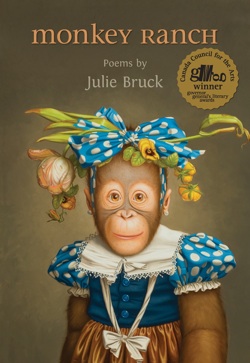
Picture
JULIE BRUCK'S LATEST BOOK
Monkey Ranch, Brick Books, 2012

Description from the publisher:

Winner of the 2012 Governor General’s Award for Poetry

Globe 100 Book for 2012

Shortlisted for Pat Lowther Memorial Award and CAA Award for Poetry 2013

Comic and sober by turns, these poems ask us what is sufficient, what will suffice?

… a mandrill, a middle-aged woman, a shattered Baghdad neighbourhood, a long marriage, even a spoon, grapple with this unanswerable conundrum—sometimes with rage, or plain persistence, sometimes with the furious joy of a dog who gets to ride with his head through a truck’s passenger window. Julie Bruck’s third book of poetry is a brilliant and unusual blend of pathos and play, of deep seriousness and wildly veering humour. Though Bruck “does not stammer when it’s time to speak up,” and “will not blink when it’s time to stare directly at the uncomfortable,” as Cornelius Eady says in his blurb for the book, “in Monkey Ranch she celebrates more than she sighs, and she smartly avoids the shallow trap of mere indignation by infusing her lines with bright, nimble turns, the small, yet indelible detail. Bruck sees everything we do; she just seems to see it wiser. Her poems sing and roil with everything complicated and joyous we human monkeys are.”

EXCERPT FROM MONKEY RANCH

MONKEY RANCH

Our monkeys were striped
green and yellow, except
for the red and white ones.
Outside the house, a screaming
kaleidoscope of stripes chased
stripes, until they settled
in the branches at dusk,
to pick each other's nits. 

Father tired of monkey
farming, took a job in town.
We starved our monkeys.
Day by day, they slowed,
and when I picture them now,
or dream of how it was,
they stagger in the black
and white of old newsreels.

It took them a whole year
to die off while we watched.
In those days, children did
as they were told, and Mother
always favored chinchillas.
But they used to wear such
cute little monkey hats
--
red, white, yellow, and green.


THE CHANGE

So, I’ve done what my body was made for.
My eight-year-old is all legs, careening
down the basketball court, and I do

acknowledge the pulls and pushes of tides,
moons, of love and such, even if I stop short
at crystals and meet-the-plankton music.

My husband hums in the house, 
my daughter sings while she plays.
I’m hunched at the kitchen table,

jaw clenched, staring down a blank
grocery list when that stringy mouse,
the one who holds keys to this place,

scrabbles across the awful linoleum
for the first time today and my shriek
is so sudden and muscular and primal

I know I’ve pulled something in my neck.  
If this new Tin Cat™ does its job, I swear
I’ll carry the jumpy, humane contraption

straight to the park in my bathrobe,
calmly raise the metal lid and let
the mouse go with a kind, steady hand.

I’ll be better than I am,
pretend to love
this creature I'd rather drown.  

What does it mean to love
the life we've been given?

Richard Fulco: Novelist

3/14/2014

 
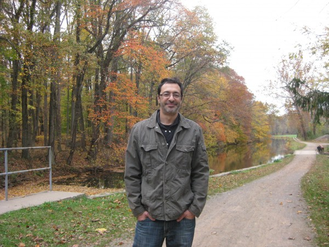
PictureRichard Fulco
RICHARD FULCO received an MFA in Playwriting from Brooklyn College. His plays have been either presented or developed at The New York International Fringe Festival, The Playwrights’ Center, The Flea, Here Arts Center, Chicago Dramatists and the Dramatists Guild. His stories, reviews and interviews have appeared in The Brooklyn Rail, Failbetter, Front Porch, Bound Off, The Rusty Toque, Full of Crow, Nth Position, the Daily Vault and American Songwriter. He is the founder of the online music magazine Riffraf. There Is No End to This Slope is his first novel.

RUSTY TALK WITH RICHARD FULCO

Kathryn Mockler: What is your first memory of writing creatively?
Richard Fulco: Five-years-old, sitting on a swing, singing silly lyrics that I wrote: “Guitar. Guitar. Guitar. I play my guitar sitting on a bench. I play my guitar with a wrench.”

Those brilliant lyrics were overshadowed a few years later when I co-wrote a salacious song with my best friend: “Ain’t she sweet, see her walking down the street. Flipping her girdle, licking her tongue, making faces at you, singing ‘yeah, yeah, yeah’.” Licking her tongue. Genius.

KM: Why did you become a writer?
RF: I never gave it any thought really. It’s not like I sat my parents down and told them I was going to become a writer. It’s something I’ve always done. And as you can see by my prolific lyric writing, I had quite the future in prose.

KM: What writers would you recommend to an aspiring writer? Or what writers were influential to you when you first started out? Who are you reading now?
RF: Read everything you get your hands on. If your wife tells you that you have to read this memoir by so-and-so, then read it. If you haven’t read anything before 1980, try it on for size. See what the old-timers were doing before Ted Talks and Netflix.

KM: What is the best literary advice you've gotten that you actually use?
RF: Finish the fucking thing. No matter what it is—a poem, short story, essay or screenplay— just complete it. Chances are it’s shit, but at least you have something under your belt, something you can learn from, something you can build upon.

KM: How do you approach revision?
RF: Revising isn’t easy—I’d choose a colonoscopy over revision every time—but my method is fairly easy. It’s primitive but it works for me. Whatever I don’t like I cut. A word. A phrase. A character. A scene. Delete. Delete. Delete. Delete. I’m not attached to anything I write. Everything is under severe scrutiny. The death of good writing is falling in love with your own words. If I can be critical of Faulkner or McCarthy, hell I have to be even more critical of my writing. Right?

KM: You founded the online music magazine Riffraf. Can you tell us about the site and how you got it started?
RF: I really wish that I were a musician. I played in bands for a while and let’s face it, it’s a lot more fun than sitting in a coffee shop or at your desk by yourself, staring into a computer screen, fucking up your eyes, drinking too much coffee and reliving the shit that you experienced as a child. My wife urged me to write about music, so I started Riffraf four years ago. At the time, I knew absolutely nothing about blogging. Still don’t.

KM: Your first novel There Is No End to this Slope, which is coming out in March 2014 by Wampus Multimedia, is about an aspiring writer who has difficulty living in the present because of his obsession with the past. How did you come up with idea for this novel? And what was the writing process like for you?
RF: In his “Note To The Reader” in Look Homeward, Angel, Thomas Wolfe wrote, “This is a first book, and in it the author has written of experience which is now far and lost, but which was once part of the fabric of his life…we are the sum of all the moments of our lives—all that is ours is in them; we cannot escape or conceal it.”

KM: Were there any writers that influenced There Is No End to This Slope?
RF: Here’s a partial list of works that influenced the writing of There Is No End to This Slope: Ernest Hemingway’s A Moveable Feast, Michael Thomas’ Man Gone Down, Frederick Exley’s A Fan’s Notes, Charles Bukowski’s Post Office, J.M. Coetzee’s Waiting For the Barbarians, Walker Percy’s The Moviegoer, Samuel Bekett’s Waiting for Godot and Endgame, Harold Pinter’s Birthday Party, Franz Kafka’s Metamorphosis and The Castle, Richard Yates’ Revolutionary Road, Joshua Ferris’ Until We Came to the End, William Faulkner’s The Sound and the Fury, J.D. Salinger’s The Catcher in the Rye, the poetry of Robert Desnos, the songs of Lennon and McCartney, George Harrison, Jeff Tweedy, Bob Dylan, Paul Westerberg, Jagger and Richards, Otis Redding, Stevie Wonder and Lou Reed.

KM: What is your favourite literary moment, if you have one.
RF: I wrote one play, submitted it to Brooklyn College’s MFA program in Playwriting, and the next thing I knew I was sitting around a table with aspiring playwrights. I think it was the biggest act of fraud ever perpetrated. On myself (that is).

KM: What are you working on now?
RF: I’m working on a rock and roll novel that is based on Pink Floyd’s founder Syd Barrett. I can’t wait until it’s done so I can go out and hear some live music.

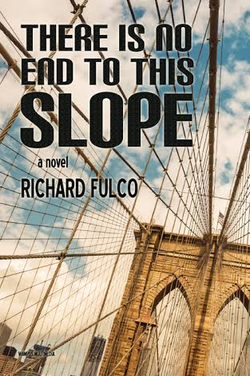
Picture
RICHARD FULCO'S NOVEL
There Is No End to This Slope, Wampus, 2014

Description from the publisher:
John Lenza, an aspiring writer from Brooklyn, hasn’t completed a novel, a play, or any other publishable work. His obsession with his part in the death of his best friend Stephanie in high school undermines his confidence and self-esteem. His struggle to reconcile his lingering guilt with the possibilities of the present sets the tone for Richard Fulco’s emotionally charged debut novel, There Is No End to This Slope.

By day, John sells textbooks to New York City schools. Like a 21st century Willy Loman, he drifts through life, letting things happen to him rather than taking charge of his life. On a sales call he meets his future wife, Emma Rue, an impulsive semi-alcoholic. At a “writerly” coffee shop near his new digs in Park Slope he meets Teeny, an overweight gay man, who mines John’s life for his own creative material. A homeless man, Richard, becomes a voice of reason, while Pete the landlord worries about whether John is truly taking “special” care of those beautiful wood floors in the apartment.

At one point John describes himself as intelligent, perhaps too intelligent to do anything. He and many of the other characters find it difficult to navigate the day-to-day while nurturing a sensitive and creative spirit. Should John be tortured by something that happened so long ago? Or is he using an old trauma to sidestep his creative responsibility and potential?

Through deeply wrought characters and scenes, Richard Fulco touches on a fundamental issue that drives great artists to self-destruct. But when John has wrung all he can out of his pained self, it may be the mundane certainties of life that ultimately save him.

THERE IS NO END TO THIS SLOPE EXCERPT

We limped into 2004. I made my customary New Year’s resolution: stay at home and watch the incomparable Dick Clark. I really wanted to be alone, so I had been urging Emma to shack up with Pamela, who had offered her a place to stay until her new apartment was ready, but for some reason she lingered in our place until the insufferable end. At least I tried my best to make the most of our last night together by making dinner and renting our favorite movie, When Harry Met Sally. That’s more than I could say about my soon-to-be-ex-wife, who spent the entire evening packing and getting ready to move out the next morning. It was only fitting that our marriage should dissolve on such a trivial holiday, one that we both despised.

New Year’s Eve is just an excuse to get drunk, stay up all night, do regrettable things, and blame the lure of the evening for any bad behavior. I had spent every New Year’s Eve in New York, thirty-six of them to be exact, but never considered, not even for a second, going to Times Square to watch the ball drop with thousands of screaming, intoxicated tourists. I had also refused to pay an outrageous sum for some below-average prix fixe dinner at a trendy café that felt justified in ripping off its customers because it offered a complimentary glass of cheap champagne.

So there I was, greeting the New Year, bidding the old one good riddance, anticipating my independent life while standing at the threshold of something new and unknown, and that prospect thrilled, overwhelmed and terrified me.


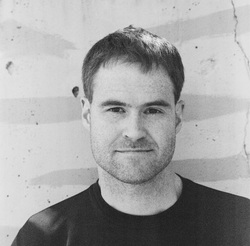
Craig Davidson: Author

12/28/2013

 
PictureCraig Davidson
Photo by Kevin Kelly
CRAIG DAVIDSON was born and grew up in St. Catharines, Ontario, near Niagara Falls. He has published three previous books of literary fiction: Rust and Bone, which was made into an Oscar-nominated feature film of the same name, The Fighter, and Sarah Court. Davidson is a graduate of the Iowa Writers' Workshop, and his articles and journalism have been published in the National Post, Esquire, GQ, The Walrus, and The Washington Post, among other places. He lives in Toronto, Canada, with his partner and their child.

RUSTY TALK WITH CRAIG DAVIDSON

Madeline Bassnett: What is your first memory of writing creatively?
Craig Davidson: Likely an assignment I did for grade 5 English; my teacher heaped it with praise, which was lovely I suppose, and encouraging, but later, when I was poor and couldn’t publish a thing, I sort of wished she’d said I sucked and ought to set my sights on a plumbing career instead.

MB: You’ve received an MA in creative writing from the University of New Brunswick and an MFA from the acclaimed program at the University of Iowa. How did these different educational experiences contribute to shaping you as a writer?
CD: I think they were ultimately more alike than I’d expected. Which means I likely did one degree too many. But what they did, more than anything, was give me the time to sit down, ass in chair, and get a lot of writing done. I failed a lot, got rejected a lot, failed some more, had some small successes, some more failures, then things got a little better. But of course most writer’s careers are loopy roller-coasters: there will be as many ups as downs.

MB: You’re now a new dad. Has being a father changed your writing and/or your writing process? Has it changed what you’re interested in writing about?
CD: I think primarily it’s solidified the idea that it is, for me, a job. I have to be up and working 5, 6, sometimes 7 days a week. It’s not glamorous. But I have to help provide for my family, as my father and mother provided for me. So it’s a big and sobering responsibility, and the only way I’ll manage to do it, as a writer, is if I’m busting my hump. Every writer I know handles themselves the same way, pretty much. There’s nothing really romantic to it, the way I’d envisioned it in grad school—although being working writer, and all that entails, is a very nice thing … for now. The wheels could spin off at any moment. But, having worked really hard, the only real way to stay in the same spot is to work just as hard. Thankfully I like working hard, and don’t have any of those preconceptions anymore about the glamour or romance of it; I understand that to be a writer, for most of us, means to write and write and write and get rejected and then maybe, if you get lucky, you catch a break. And I have responsibilities now that preclude me from being too precious about any of it—I work, I work, like my father (a banker) and my mother (a nurse) and my fiancée (a social worker) do. It’s a job. A great one, one I’m very lucky to have, but a job nonetheless.

MB: Your first book, Rust and Bone (2006), a collection of short stories, was recently released as a critically acclaimed film (2012). What was it like having your stories transformed into a film? How did they turn these quite different pieces into one narrative?
CD: It was fantastic. I was unbelievably fortunate. The stories were written when I was 25, 26, 27, 28—the stories off the pen of a sort of young man. They were adapted by a director in his fifties, who has a full command of his own craft. He added things to the stories that weren’t there, though he kept the rawness of them, which is likely their strongest quality. As to how they did it—movie magic! No, I think it was more a matter of finding two characters in separate stories and making their stories connect.

MB: You also write horror fiction under a pen name, Patrick Lestewka. And I believe you’re more recently moonlighting as Nick Cutter. Why do you use a pen name for your genre fiction? Why two names?
CD: That’s kind of my agent’s idea. He’s a good agent, I trust him, so I trust his guidance on this. Sometimes writers want a kind of separation between church and state—or in my case, a separation between gooey slime monsters and whatever literary endeavours I may decide to try down the road. I’m not really for that separation, but it is what it is. For my part, I make no real attempt to keep up the charade; it’s pretty easy to figure out that I’m all those guys!

MB: Your recent book, Cataract City, is a novel about male friendship, revenge, and the power of place to shape and control our lives. It was short-listed for the 2013 Giller Prize. How did it feel to be on the short-list, and do you see this honour having any longer-term impact on your writing?
CD: It was a lovely and unexpected experience. It was also tremendously lucky, as I would imagine most shortlisters would say; there’s always books that could take the place of your book, so you just have to count those lucky stars. I don’t think it’ll have an impact in terms of what I write about, no; I’ve always kind of written what I write and never expect to get any awards attention at all. I’m not really expecting to get nominated again, to be frank. It was a Halley’s Comet nomination, never again to be seen in my lifetime, and honestly I’m OK with that.

MB: When I was reading Cataract City, I often thought about your gig writing horror, especially when the two boys, Owen and Duncan, wind up in the woods with their wrestling hero, Bruiser Mahoney. After Mahoney dies, the twelve-year-old boys have to survive an arduous and frightening journey back to civilization. You succeed very well in communicating the visceral horror of the situation. Do you feel that your writing of horror influences your other writing, and vice versa?
CD: Absolutely. My horror book, The Troop, is about a bunch of Boy Scouts stranded on a tiny island off PEI; I wrote it in 5 weeks after finishing Cataract City, because I really enjoyed writing those boyhood sections in the novel and thought it would be good to focus on characters at that age again, except in a more overtly horrific scenario. So one side of things does impact the other, for sure.

MB: As in Rust and Bone and The Fighter, Cataract City’s men are fighters, and not only in the metaphorical sense. Duncan gets involved in brutal bare-knuckle fights, and is dragged into dog-fighting matches. What draws you back to these scenes of male violence and competition?
CD: Oh, good question. I think, to be honest, I’ve glutted myself on that world. The overtly male. But at the time of writing, I guess I felt that … well, listen, we all feel there are areas of human experience that we can map best. So those were mine. But I feel like I’ve mapped that area pretty damn thoroughly now. Maybe in a few years, a decade or two, I may come to some personal reckoning or something to do with my son that asks me to enter that realm again and write on it, but for now I think it’s time to hang up my boxing gloves, wrestling trunks, and so on.

MB: Cataract City is also about a place: Niagara Falls. It’s a fascinating depiction of what lies behind the tourist trap around the Falls. You grew up partly in St. Catharines, just down the road. How does Niagara
--and place more generally--influence you and your writing?
CD: Hugely. I never really understood until it dawned that all my books were set in the area. I never considered myself a “place-based” writer, the way David Adams Richards is, for example, so many of his books set in the Miramichi. But clearly, I have that same sense of things. The results bear that out. Every book is set, at least partly, in that area. I used to think it was just because I knew those streets best—and partly, that’s exactly why I set stuff there. But I know those streets and feel comfortable about writing about them, too. And since writing a novel is often a daunting task, you need a few implicit sureties before setting out. Either the plot, or a strong character, or the place where you’re setting it. So I know that place well, and that gives me confidence—and with writing, as with many things, confidence is key.

MB: What are you working on now?
CD: Just being a bum, really. I’m looking after my son while my fiancée gets her Masters of Social Work. So the imagination is laying fallow right now!

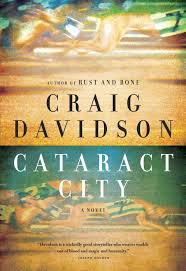
Picture
CRAIG DAVIDSON’S LATEST BOOK
Cataract City, published by Doubleday Canada, Random House, 2013
Read an excerpt of Cataract City in MACLEAN'S.

Description from the publisher:
Owen and Duncan are childhood friends who've grown up in picturesque Niagara Falls--known to them by the grittier name Cataract City. As the two know well, there's more to the bordertown than meets the eye: behind the gaudy storefronts and sidewalk vendors, past the hawkers of tourist T-shirts and cheap souvenirs live the real people who scrape together a living by toiling at the Bisk, the local cookie factory. And then there are the truly desperate, those who find themselves drawn to the borderline and a world of dog-racing, bare-knuckle fighting, and night-time smuggling.

Owen and Duncan think they are different: both dream of escape, a longing made more urgent by a near-death incident in childhood that sealed their bond. But in adulthood their paths diverge, and as Duncan, the less privileged, falls deep into the town's underworld, he and Owen become reluctant adversaries at opposite ends of the law. At stake is not only survival and escape, but a lifelong friendship that can only be broken at an unthinkable price.

Matt Rader: Poet

12/28/2013


RUSTY TALK WITH MATT RADER

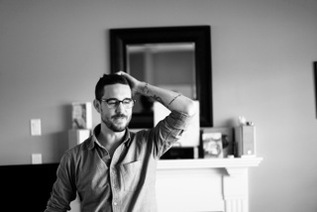
PictureMatt Rader
Photo by Ron Pogue
Matt Rader is the author of three collections of poetry, Miraculous Hours, Living Things, and most recently, A Doctor Pedalled Her Bicycle Over the River Arno. His poems have recently appeared in publications in the United States, Romania, the Czech Republic and Canada. He lives on Vancouver Island.

Kerrie McNair: How did you first get into writing?
Matt Rader: That’s one of those questions of history I’m always tempted to rewrite. I probably have several times. I recall writing in school as a kid. And I recall writing poems with my mum when I was eight or nine. Then I wrote poems all through high school. I took writing classes at the University of Victoria from age 18-21. But I didn’t start seriously until the fall after I graduated from my undergrad. That fall I wrote a poem called “Exodus.” Later that poem became the first poem I published professionally in sub-Terrain magazine.

KM: What poets or writers did you read you when you first started out? Who are you reading now?
MR: In those earlier years after my time at UVic, I read Ted Hughes exhaustively. Then I read Seamus Heaney who remains a major influence. Michael Longley was my primary influence for more than half a decade. In the last few years Larry Levis has been hugely important, and most recently I have fallen in love with Mary Ruefle’s poems. Heaney, Longley, Levis, and Ruefle are all currently represented in the Jenga of books on my bedside table. I could also tell this story with Homer, Keats, Hardy, Yeats and Eliot. Or Bishop, Plath, Lowell, Gilbert, and Larkin. Not to mention Babstock, Solie, O’Meara, Thornton, and Bachinsky. The problem with any list like this is that I can’t help but make egregious and unforgivable omissions.

KM: You used to run a literary micro-press out of Vancouver for writers who were marginalized for a variety of reasons including age, content matter, sexuality and ethnicity. Can you describe how you got into literary/cultural activism and how it informs your writing? Are you working on any community projects at the moment?
MR: I was lucky enough to meet a set of young artists and writers, largely centred in Vancouver in the early aughts, who had a desire to share their work with each other. Many of us had grown up in the DIY music and zine culture. Several of us were involved in various queer communities. We were culture makers and pursued that right into our publishing deals and writers festival invitations.

I’ve been involved in several projects lately and there are few more in the works. A year ago I collaborated with my friend Grant Shilling to put on a community storytelling event. We live in a small mountain village on Vancouver Island. The foothills here have been ravaged over the last century and a quarter, first by coal mining and then later by logging. Currently the hills around our village are used both industrially for logging and recreationally as a major mountain biking destination. The event was called Bronco’s Perseverance: Changing Gears in Cumberland. Bronco’s Perseverance is the name of one of the main trails along Perseverance Creek. The trail is named after the long time Cumberland mayor, Bronco Moncrief. Our tagline was “Beer and bullshit.” It was amazing.

This past summer I collaborated with a local designer, Sarah Kerr, to create large poster-sized newspapers modeled on papers from the 1913 that we researched in the Cumberland Archives. There were six pages and they told the story of two young girls during the height of the Great Vancouver Island Coal Strike that was 100 years ago this summer. We put the posters up around town.

I wouldn’t say that my cultural activism informs my writing exactly, but I do think my writing is informed by the same impulses as my cultural activism. I can be didactic about it and try to make a case for aesthetic and moral value, for form and identity, for art as experience, but in the end, those impulses are as known and as mysterious to me as to anyone else.

KM: You’ve been involved in curating several reading series such as the Robson Reading Series. Do you have any advice for new poets or writers on reading their work for an audience?
MR: Read as slowly as you possibly can, then read a little bit slower. Always read less. I believe Mark Twain has a set of rules. Google Mark Twain’s rules.

KM: Can you describe the writing process for your most recent collections of poems, A Doctor Pedaled Her Bicycle over the River Arno, which your publisher describes as unraveling “our layered identities to explore the lyrical fabric of humanity”? Over what length of time were the poems written? Was there a particular catalyst for this project?
MR: The earliest poems in A Doctor were composed alongside the bulk of my previous collection Living Things and I was in the midst of composing the core poems in A Doctor when Living Things came out. All told, it probably took about three years to write.

I was pursuing several things in that book. One was a reintegration of narrative into the poems, something that I felt I’d written out of my poetry in Living Things.

Secondly, I was exploring cultural history in a way that I had explored ecocultures in Living Things. I was particularly looking at my family history on one hand, and the colonial and post-colonial history of coastal British Columbia on the other hand. It wasn’t really an either/or. These histories were more braided than that description suggests.

Thirdly, I had been thinking since Living Things about poetic form and tradition and in A Doctor that became expressed as custom and customs. I was intrigued by the idea that custom and customs (or costumes as Elizabeth Bishop would have it!) can be both the guarantor of civilization and a purveyor of horrific violence.

KM: Many of the poems such as “I Acknowledge:  and “History” in A Doctor Pedalled Her Bicycle over the River Arno detail the lasting presence of history in contemporary life. How did the past motivate your desire to define the present when it came to writing these poems?
MR: John Dewey says “art celebrates with peculiar intensity the moments in which the past
reënforces the present and in which the future is a quickening of what now is.” I really like how he says, “what now is” instead of “what is now.” I know that I should be more generous and explain what I think this means, but I don’t want to. I tend to see everything relationally, which is to say with a kind of historicity.

KM: Conversely, poems like “Natural Lives” and “Homeowners Manual” address sentiments of devotion. Was it a conscious decision to, at some point, stop looking back?
MR: No. I never did stop looking back. Though I don’t think of the past as being “back there.” Looking at history is looking in the mirror. Looking in the mirror is looking at history.

KM: What is your funniest or favourite literary moment, if you have one?
MR: When I was a small boy Dennis Lee came to my small island town and gave a reading for children. I remember the bookstore as having creaky old wooden planks for a floor. Everything seemed very dark. He picked me out of the crowd and sat me on his knee and began to recite a poem. To which I promptly ran away crying.

Then, nearly thirty years later, after the launch of my last book in Toronto, I walked out the party and standing in the street at the bottom of the stairs was Dennis Lee. He was holding my book!

I introduced myself and we said kind things to each other and then I told him the story I’ve just related here and he said … well, I can’t tell you what he said, not in print. But if I’m ever in your town you can buy me a beer and I’ll tell you the rest …

KM: What are you working on now?
MR:  I have a collection of short stories that’s meant to come out next fall. I’m also working on a new book of poems with a kind of deep hermetic code. They’re largely elegiac. I’m also about to embark on a filmmaking project with a young filmmaker, called Jim Vanderhorst. I have a chapbook of poems coming out with Baseline Press at some point in 2014.

Enjoy an excerpt from Matt Rader's forthcoming chapbook from Baseline Press:

UNSPEAKABLE ACTS IN CARS


It’s the first day of summer and we’re so happy
To see the sun and the satchel of colours it schleps
All those dark kilometres. The sky is so blue
And the sea is blue and the small islands in the sea
Are blue also. How our sun must love blue. 
We have beachgrass and bull kelp and lion’s mane
And we love them all because we love the sea
Which is cold and buoyant. Friends now of seasalt
And knotweed, the mountains know all about us
And who we are when we are most ourselves.
But their blue haughty distances are no help.
We are who we are with mock orange and wisteria.
We’ve nothing to bitch about. The high cirrus
Can’t touch us. We been alive just long enough.

originally published in The Fiddlehead 253


DOVE CREEK HALL (FORMERLY SWEDES' HALL)


The children play their fiddles so slowly I am sad
For the old wooden hall among the cow patties.
Who cut the rhodo blooms and set them on the piano?  
They bow tiredly through every tune. Even the cows
Have wandered away from the music to the far side
Of the pasture. All the Swedes who built this hall
Are dead now and the women they married are dead
And the pastor who married them and their friends.
But the children do not know this or just how sad
Beauty is on the last day of spring with instruments
And young players making music beneath the rafters.
They play along with mistakes and embarrassment.
Tell me, who hung the hand-stitched stars on the wall?
Who hung the evening light from the windows?


originally published in Arc 67

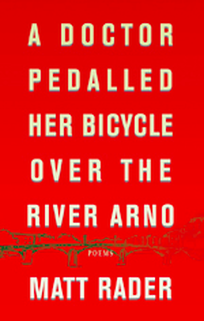
Picture
MATT RADER'S MOST RECENT BOOK OF POETRY
A Doctor Pedalled Her Bicycle Over the River Arno
House of Anansi Press, 2011


Description from publisher:
A Doctor Pedalled Her Bicycle Over the River Arno
carries within it all the technique, vision, imaginative labour, and razor-sharp precision of Matt Rader’s first two collections, Living Things and Miraculous Hours. But it also ascends to a new and luminous, demanding, particularized realm of the human.

Wildflowers and weeds, newspaper archives and illness, hostels and hostiles, parenting and the shadowy history of grandparents, war and Renaissance paintings: Matt Rader’s unassuming, deeply spirited, and expansive poems show us again how contemporary lyric can go such a long way toward revealing our true homes to us at the moment we find ourselves most nakedly un-housed. Rader seeks out limits, borders, and frontiers—those mapped for us by authority, and the concomitant, interior shadowlines we ourselves draw—in order to test their validity.

Mira Gonzalez: Poet

12/19/2013

 
PictureMira Gonzalez
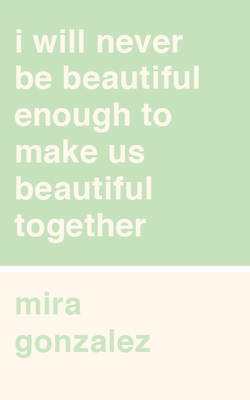
Mira Gonzalez [b. 1992] is from Los Angeles, California. She is the author of i will never be beautiful enough to make us beautiful together (Sorry House, 2013) and is widely published in print and online. She currently lives in Brooklyn, New York.

RUSTY TALK WITH MIRA GONZALEZ

Sara Jane Strickland: What is your first memory of writing creatively?
Mira Gonzalez: when i was i think, 10 (?) i wrote a ~15 page story about aliens invading the world and like one girl stops them or something. i remember the girl had a boyfriend in the story, i remember at one point she cooks hot dogs. thats all i remember about it

SJS: What influences your writing the most?
MG: i think anything i enjoy reading will influence my writing, to some degree. some things more than others. 'big' life events, like relationships etc. also make me feel more inclined to write

SJS: What is your writing process like? (Do you write every day? Where? When? Etc.)
MG: i used to try to write every day but i work like 47 hours per week now so its difficult for me to find time. i would like to work less and write more. i would say my 'process' is like 10% writing and 90% editing. every time i write a poem i probably write 2-3 pages worth of stuff then spend a lot of time editing it down into something that, i feel, expresses what i want to express, and is something i would want to read

SJS: Your book, i will never be beautiful enough to make us beautiful together, sifts through many ideas that have to do with the sensation of touching, which seem to serve more as a source of isolation than for connection. A lot of the poems seem to overlap and connect. How did you approach the structure of the book? Did you intend for it to have a narrative?
MG: all the poems in the book are about events in my life, so i guess in that sense it has some sort of narrative maybe, if you would agree that 'life' in general has a narrative, which i dont think it does. all the poems were written during very different points in my life and sometimes there is a huge span of time between the poems where i wasn't writing at all, or didnt include poems from a big chunk of my life. spencer and willis and i spent a long time choosing the arrangement of poems in the book, but it wasnt so that we could create a narrative exactly ... it was more for aesthetic purposes or something

SJS: The book deals with a variety of gut-wrenching subjects, such as loneliness, drug-use and unfulfilling relationships. At the same time the tone is objective and unattached. What made you decide to write about these subjects in this way?
MG: i think i just wrote about how i felt when [whatever thing] was happening to me. there will always be some distance between the event and the reader i suppose, because its happening to me and not them, so i try to write about things in a way that is more easily understood by more people, which might make it sound 'objective' or 'unattached', i think. that seems good/fine to me

SJS: How do you approach revision?
MG: if i reread something i wrote and i don't feel satisfied with it i revise it. i revise things constantly

SJS: You are very active on Twitter and your tweets are often funny and quirky, but also insightful and compelling. How would you say that social media websites such as Twitter have influenced contemporary poetry?
MG: i think i have no idea how to answer this question. i dont know. i view twitter as another platform to express things through writing. the same way you would express something different with a story than with a poem etc. i cant speak for anyone but myself though

SJS: How long did it take you to write i will never be beautiful enough to make us beautiful together?
MG: i think the oldest poem i wrote in the book was like, 3-4 years ago, but most of the poems werent written with the intention of creating a manuscript. i cant remember how long it took from the beginning of compiling the manuscript to publishing it. maybe a little less than a year

 SJS: Are you working on anything right now?
MG: yes. i plan to write another book but its still really really in its beginning phases so please nobody hold me accountable


Picture
MIRA GONZALEZ'S MOST RECENT BOOK
i will never be beautiful enough to make us beautiful together, Sorry House, 2013

Description from publisher:

Mira Gonzalez is a phenomenon of the same breed as Tao Lin: she might actually be the only literary social media presence more prolific and more intense–flitting between her two Twitter accounts, @miragonz and @miraunedited, is a kind of poetry in and of its self and fairly representative of her first collection. Either brutally honest to the point of appearing unhinged or wildly fantastic, but totally engrossing regardless.

Read an excerpt from her book here. 


Alexis O'Hara - Sound Performance and Installation Artist, Poet

12/5/2013

 
PictureAlexis O'Hara
Photo by Annie-Eve Dumontier
Alexis O’Hara tends to an interdisciplinary practice that exploits allegories of the human voice via vocal & electronic improvisation, sound installation and text-based performance. She has released one book of poetry, two music CDs and a number of experimental mini-CDs. With Subject to Change and The Sorrow Sponge - two projects involving wearable electronics, direct audience interaction live performance using field recordings - she flirted with interactive documentary performance. Her sound installation, SQUEEEEQUE, an igloo built of recycled speakerboxes, has toured many exhibits and festivals including Club Transmediale in Berlin and Elektra in Montreal. She has shared the stage with amazing artists including Diamanda Galàs, Ursula Rucker, Henri Chopin and TV on the Radio. Her eclectic performances have been presented in diverse contexts in Slovenia, Austria, Mexico, Germany, Spain, The United Kingdom, Ireland, France, Belgium and across Canada and the US. Alexis and her drag king alter-ego, Guizo LaNuit are mainstays of the Montreal cabaret scene.


RUSTY TALK WITH ALEXIS O'HARA

Sara Jane Strickland: What is your first memory of being creative (writing, art making, etc.)?    
Alexis O'Hara: When I was four years old, my family lived in a small town outside of Geneva in a one room apartment. My parents' bed was surrounded by a curtain that my little sister and I would use as a stage. We tucked the corners of kleenexes into our tights to make "tutus" and danced on our tippy toes for Mom & Dad. Later, every Easter/Christmas/Thanksgiving, I would boss around cousins and force them to do nativity plays/fashion shows/skits for our parents.

SJS: When did you realize that you wanted to be an artist?
AO: After I realized that Charlie's Angel was not a real job, I wanted to be an actress. Around age 20, I got really disheartened by the business of show business, possibly having a crisis of confidence that I was not thin/pretty enough to be an actress. I've written poetry since I was a kid, and made things too, but I always considered my collages, jewelry, sculptures...to be "arts & crafts". I can't say I felt comfortable calling myself an artist until I was about 30. But I've never actually "wanted" to be anything else than someone who is involved in artistic projects.

SJS: How would you describe your own personal process of making art?
AO: I'm terribly undisciplined so I tend to seek out external deadlines to motivate myself. Sometimes an idea just shows up and nags and yanks at my subconscious until I make it real. But usually I create in preparation for public presentation. This past summer, I made a lot of work just for the sake of making it. I was so unaccustomed to this idea of failure, making something that is just an experiment. But of course, I've had a lot of failures and experiments when it comes to live performance. A good ten years worth of my public performances were entirely improvised and therefore very subject to the whims of circumstance – some soaring successes and some horrible failures. I have to thank all the known and unknown audience members who witnessed this very public "personal process of making art".

SJS: What influences your art the most?
AO: Stuff that makes me angry, stuff that makes me swoon, heartbreak, my niece, Olivia, the desire to make a mark, the desire to make people laugh and talk to each other.

SJS: What artists/writers/poets would you recommended to someone aspiring to be an artist or writer?
AO: Sometimes I wish I could go back in time and be a better pupil. For years I closed my eyes and ears, thinking that everything I created had to come from deep inside an innocent, almost ignorant place. And then you make something that you think came just from you and someone says: "Oh that's just like *name of someone you've never heard of*". Ah, and who am I to say what ended up being good for me would be good for anyone else? I can list my favorite artists and writers, but will they be helpful to aspiring artists? Who knows? What I recommend to aspiring artists and writers is just that they do it! Work on it! Ignore what is trendy or cool. Believe in your own voice, even if you don't see it reflected out there.

I know I will forget some but off the top of my head, here are some artists who have resonated with me: Lynda Barry, Pipilotti Rist, Ai Wei Wei, Gerhardt Richter, Katherine Dunn, Laurie Anderson, e.e. cummings, Takashi Murakami, the Mad Magazine artists, Dr. Seuss, Janet Cardiff & George Bures, Beat Takeshi Kitano, Lydia Lunch, Rebecca Horn, Buckminster Fuller, Marcus Aurelius, Antoine de Saint-Exupéry, Andy Warhol, Brian Eno, David Bowie, Miranda July (the recordings), Theo Jansen, Frida Kahlo, Ivor Cutler.

SJS: What is it about audio installations/performance art that appeals to you as a medium for expression?
AO: It's cheaper than making movies but can provide the same sort of multi-sensorial, immersive experience.

SJS: Your piece Squeeeeque – The Improbable Igloo is a particularly interesting audio installation/sculpture. What inspired you to build an igloo made of speakers?
AO: It came from a dream I had. My head was a microphone and I lived in a house made of speakers. Every time I went by the walls, a wailing screech erupted. When I woke up, I thought about this idea of a house made of speakers. Since the speakers are blocks, it seemed like an igloo was a perfect structure. At first I thought the project was about feedback and recycling rejected technology, but then it turned out that it was really about collective vocal improvisation. 

SJS: What are you working on now?
AO: As usual, I'm juggling a bunch of projects at once. I just got back from Serbia where I built a speakerbox igloo and premiered a performance where I use helium balloons to get my dress caught in a chandelier. I'm working with my friends 2boys.tv on their new performance work, Tesseract. I'm getting ready for a residency at Recto-Verso in Quebec City where I'll continue work on an installation called La Couvée, that simulates the experience of being in a giant egg sac. I have two new musical projects. One is very tender, with a lot of sad songs. The other one involves my alter-ego Guizo LaNuit and Stephen Lawson's alter-ego, Gigi Lamour. I believe I can claim that it's the world's only drag king / drag queen party medley duo. We're called GuiGi and we're going to be huge. We're playing a retirement party in December and I'm hoping we can book a bunch of gay weddings in 2014.

PicturePhoto by Nikol Mikus
Alexis O'Hara's sound installation, SQUEEEEQUE, an igloo built of recycled speakerboxes, has toured many exhibits and festivals including Club Transmediale in Berlin and Elektra in Montreal. 

Marita Dachsel: Poet

11/14/2013

 
PictureMarita Dachsel
Photo by Nancy Lee
Marita Dachsel is the author of Glossolalia, Eliza Roxcy Snow, and All Things Said & Done. Her poetry has been shortlisted for the Robert Kroetsch Award for Innovative Poetry and the ReLit Prize and has appeared in many literary journals and anthologies, including Best Canadian Poetry in English, 2011. Her play Initiation Trilogy was produced by Electric Company Theatre, was featured at the 2012 Vancouver International Writers Fest, and was nominated for the Jessie Richardson Award for Outstanding New Script. She is the 2013/2014 Artist in Residence at UVic’s Centre for Studies in Religion and Society.

RUSTY TALK WITH MARITA DACHSEL

Kathryn Mockler: What is your first memory of writing creatively?
Marita Dachsel: My mother was an elementary school teacher, and grade one was her favourite to teach partially because she got to teach kids to read and write creatively. She did a great job instilling the importance of both in me, and I know I was writing creatively thanks to her long before my first true memory. When I was around five I wrote and illustrated a collection of stories about horses called…wait for it…Horse Stories. I remember spending longer on the illustrations than the stories, and I think the illustrations came first.

My parents’ living room is very gothic—red carpet, red velvet curtains, dark beams, huge heavy-glassed lights that look medieval in inspiration, a fireplace, and a menagerie of taxidermied animals and birds along one wall. But it’s the room that gets the most natural light. I remember writing one of the stories on the carpet, the sun warming my body, crayons beside me, the television on as it always was (I can’t remember the show, but Dukes of Hazard is my default childhood memory show). I was so proud of my work. I still have it.  

KM: How did you become a writer?
MD: I always wrote. When I was in elementary school one of my goals was to be a writer when I grew up (along with fire fighter and architect, so take that for what it’s worth), and while I continued to write as I got older, it didn’t really seem like something that could be real.

Then I went to college with a vague idea that I might become and English professor. There I took my first creative writing class, amazed that this was possible. I loved it. My first published poem I wrote in that class.  Then I learned you could do a degree in it at UBC, so I transferred and ended up doing both my BFA and MFA there. Despite this, being a writer feels both like something that I just happened to become and something that I’ve always been.

KM: What writers did you read you when you first started out? Who are you reading now?
MD: Just before I took that very first creative writing class, I was in a John Steinbeck and John Irving phase. Then I discovered Canadian writers and women writers. Reading Canlit felt revolutionary. Margaret Atwood, Barbara Gowdy, Carol Shields. Anything and everything in my Canlit anthology seemed to be a springboard.  

Now, I don’t have enough time to read everything I want to read. So many novels, poetry collections, essays, short stories, memoirs I want to read. Right now, I’m reading Brenda Shaughnessy’s Our Andromeda, Steven Price’s Omens in the Year of the Ox, Amanda Leduc’s The Miracles of Ordinary Men, Ann the Word: The Story of Ann Lee, and what feels like a million various poems and anthologies for the poetry class I’m teaching on poetic forms this fall. I’ve been itching to start Joan Didion’s Blue Nights, but I’m going to wait for the right weekend to devour it.

KM: Can you describe your writing process? How does revision figure into the process?
MD: My process for poetry varies a lot depending on the poem, what was its initial impulse, where it came from. I scribble lines in a notebook, return days, months later and build off a line or an image. Then cut, slash, and rebuild.

With the poems in Glossolalia, so much was dependant on finding the right voice and shape. I’d research, make notes, write a draft. If the voice wasn’t right, I’d move on to the next wife. But if I felt like it was close, I’d start shaping the poem, writing more and more, then hack it to pieces, rewrite, hack, rewrite until it all sounded and looked right. Then I’d come back to it in a year or two. If it still felt right, great. If not, back to the beginning of the processes. 


KM: What is your funniest or favourite literary moment, if you have one?
MD: When my eldest was a baby, I read him Oliver Jeffer’s Lost and Found many times a day. It was a family favourite and when I got to the part where [spoiler!] the penguin and the boy are reunited, I would hug my son and say “A big hug for the penguin, a big hug for the boy, a big hug for you.” One day when he was about 18 months, he was “reading” the book by himself on the floor of our living room. I spied him from the kitchen. He turned to the hugging page and he hugged the book. It still makes me a little misty remembering that moment.

KM: Your second poetry collection Glossolalia, is a series of monologues spoken by the 34 polygamous wives of Joseph Smith. How did you come to the premise of this book and what drew you to the subject matter?
MD: I’ve always been interested in fringe religions, and a few years ago the FLDS in Bountiful, BC was in the news. I was curious about their tenet of polygamy and discovered that it was first introduced into the Mormon Church (of which the FLDS are a breakaway sect) by their founder Joseph Smith way back in the 1840s. I wondered about the women, how they must have reacted when faced with a concept so alien to the society in which they lived, to the culture in which they were raised. I wondered how I would have reacted.

I love research and can get obsessed about a subject quite easily. I found two great biographies on Smith’s wives: In Sacred Loneliness: The Plural Wives of Joseph Smith by Todd Compton and Mormon Enigma: Emma Hale Smith by Linda King Newell and Valeen Tippetts Avery. I started reading them, responding with poems. The material is very rich—sex, religion, power, gossip, motherhood, sisterhood, jealousy. Juicy stuff.

KM: You’ve managed to give each wife her own voice and an impression of her character sometimes with just a few words or a detail. An example of this are the final lines of Emma Hale Smith’s monologue: “What I know: not all eggshells are fragile. / Not all twigs snap.” This tells us so much about her and cycles back to the first line which I understand is an actual quote from Emma Hale Smith: “I did not ask for this life but accept it as my calling.” While this is a fictionalized account of Joseph Smith’s wives, how did your research come into play in terms of how you developed the voice of each wife and how you shaped the narrative of the collection?
MD: I devoured the biographies and once I realized that I wanted to write a poem for each wife, that this was going to be a book-length project instead of just a few poems, I knew that I needed to get them right. They needed to be distinct, and that would be hard as they were all had similar backgrounds, lived at the same time, in the same town, shared the same faith and husband. But of course, they were all very different from each other, and I hoped to capture that. For some polygamy was something they embraced, others railed against it, and for others it was barely mentioned. The narrative was organic; I never plotted out what moments I wanted to write about. At one point I read a book about Joseph Smith’s death mask. The mask never made it into the collection, but his death was there, from a few angles.

I’d read about the woman, make notes, try to hear her voice, write a draft, repeat as necessary. The first draft of the first poem I wrote for Glossolalia was Emma’s, but it took six years of rewriting her to get it right.

KM: Each poem in Glossolalia takes on a different shape and form. What informed your choices about typography, line breaks, stanza breaks, etc.?
MD: I believe form and content are intertwined, that they inform each other. Ultimately, it was simply a lot of rewriting, lots of playing on the page, reading aloud, and rewriting some more until it sounded and looked right.

KM: In many ways, the book is more about the diverse and complicated relationships that exist between women than about the Mormon religion, but has there been any response from the Mormon community to your book and/or did you have any concerns around this?
MD: There hasn’t been any direct response from the Mormon community, but I also haven’t searched it out yet, partly because I am a little scared to. I’m not Mormon, I did write about women in a community I don’t belong to, have no ties to. I am a little concerned at being called out for appropriation or being insensitive. Many of the wives have hundreds of progeny. What if there is an irate great-great-granddaughter? I shouldn’t be afraid (it’s poetry!), but part of me is nervous. I’d hate to have that kind of conflict.

That said, I spoke with two ex-Mormons who came to my readings, one in Edmonton, one in Victoria. The man in Edmonton told me that I “got it right.” The woman in Victoria said that she was thankful for how respectful I treated the subject and that she’s planning on passing my book along to some in her family, many of whom are still Mormon. Those conversations buoyed me.

KM: What are you working on next?
MD: I’ve been working on some essays and poems that may or may not become a collection, but my big new project is a series of monologues from the points of view of self-appointed messiahs, some real, some fabricated. I’m a slow writer, but thanks to the good folks at the Centre for Studies in Religion and Society at UVic who made me this year’s Artist-in-Residence, I have space and time to create throughout this academic year. I’m very excited to see where they take me.


Picture
MARITA DACHSEL'S MOST RECENT POETRY BOOK
Glossolalia, Anvil Press, 2013

Description from Publisher

Glossolalia is an unflinching exploration of sisterhood, motherhood, and sexuality as told in a series of poetic monologues spoken by the thirty-four polygamous wives of Joseph Smith, founder of The Church of Jesus Christ of Latter-day Saints. In Marita Dachsel’s second full-length collection, the self-avowed agnostic feminist uses mid-nineteenth century Mormon America as a microcosm for the universal emotions of love, jealousy, loneliness, pride, despair, and passion.

Glossolalia is an extraordinary, often funny, and deeply human examination of what it means to be a wife and a woman through the lens of religion and history.


<<Previous
Forward>>

    RSS Feed

    Rusty Talk

    Rusty Talk Editor:
    Adèle Barclay

    The Rusty Toque interviews published writers, filmmakers, editors, publishers on writing, inspiration, craft, drafting, revision, editing, publishing, and community.

    Unless otherwise stated all interviews are conducted by email.


    Our goal is to introduce our readers to new voices and to share the insights of published/ produced writers which we hope will encourage and inspire those new to writing.

    Archives

    November 2017
    February 2017
    October 2016
    September 2016
    August 2016
    June 2016
    May 2016
    April 2016
    February 2016
    January 2016
    December 2015
    October 2015
    August 2015
    July 2015
    June 2015
    March 2015
    January 2015
    December 2014
    September 2014
    August 2014
    July 2014
    May 2014
    March 2014
    December 2013
    November 2013
    October 2013
    September 2013
    May 2013
    March 2013
    February 2013
    December 2012
    November 2012
    October 2012
    September 2012
    August 2012
    July 2012
    June 2012
    May 2012
    April 2012
    March 2012
    February 2012
    January 2012
    December 2011
    November 2011
    October 2011
    September 2011
    August 2011

    Categories

    All
    Activist
    Adele Barclay
    Alex Carey
    Alex Leslie
    Amelia Gray
    Andrew F. Sullivan
    Ania Szado
    Artist
    Author
    Bill Bissett
    Bob Kerr
    Bonnie Bowman
    Brian Joseph Davis
    Carolyn Smart
    Cartoonists
    Catherine Graham
    Children
    Christian Bok
    Comedians
    Cornelia Hoogland
    Daniel Zomparelli
    Danis Goulet
    David Groulx
    David Hickey
    David Whitton
    Dina Del Bucchia
    Directors
    Documentary
    Editors
    Elisabeth Harvor
    Elizabeth Bachinsky
    Emily Schultz
    Erin Moure
    Experimental
    Fiction Writers
    Filmmakers
    Francisca Duran
    Gary Barwin
    Glenn Patterson
    Griffin
    Griffin Poetry Prize
    Heather Birrell
    Hoa Nguyen
    Iain Macleod
    Illustrators
    Interview
    Ivan E. Coyote
    Jacob Mcarthur Mooney
    Jacob Wren
    Jacqueline Valencia
    Jane Munro
    Jeffrey St. Jules
    Jennifer L. Knox
    Julie Bruck
    Karen Schindler
    Kevin Chong
    Laura Clarke
    Laurie Gough
    Linda Svendsen
    Lisa Robertson
    Lynne Tillman
    Madeleine Thien
    Maria Meindl
    Marita Dachsel
    Matt Lennox
    Matt Rader
    Media Artists
    Michael Longley
    Michael Robbins
    Michael Turner
    Michael Vass
    Michael V. Smith
    Mike Watt
    Mina Shum
    Mira Gonzalez
    M. NourbeSe Philip
    Monty Reid
    Musician
    Myra Bloom
    Nadia Litz
    Nonfiction Writers
    Novelists
    Patrick Friesen
    Paul Dutton
    Penn Kemp
    Per Brask
    Performers
    Playwright
    Poetry
    Poets
    Priscila Uppal
    Producers
    Publishers
    Rachel Zolf
    Ray Hsu
    Renuka Jeyapalan
    Richard Fulco
    Richard Melo
    Rick Moody
    Robin Richardson
    Rob Sheridan
    Roddy Doyle
    Russell Thornton
    Sachiko Murakami
    Salgood Sam
    Scott Beckett
    Screenwriters
    Semi Chellas
    Sharon Mccartney
    Sheila Heti
    Short Fiction Writers
    Sound Artist
    Steve Roden
    Tanis Rideout
    Tom Cull
    Translation
    Translators
    Travel Writers
    Trevor Abes
    Tv Writers
    Ulrikka S. Gernes
    Vanessa Place
    Visual Art
    Vivieno Caldinelli
    Writers
    Zachariah Wells

Powered by Create your own unique website with customizable templates.
  • Home
    • Issue 1 >
      • Creative Nonfiction: 1
      • Fiction: 1
      • Screenwriting: 1
      • Poetry: 1
      • Contributors: 1
    • Issue 2 >
      • Visual Art: 2
      • Fiction: 2
      • Poetry: 2
      • Masthead: 2
      • Contributors: 2
    • Issue 3 >
      • Poetry: 3
      • Visual Art: 3
      • Comics: 3
      • Fiction: 3
      • Reviews: 3
      • Masthead: 3
      • Contributors: 3
    • Issue 4 >
      • Prose: 4
      • Poetry: 4
      • Reviews: 4
      • Visual Art: 4
      • Contributors: 4
      • Masthead: 4
    • Issue 5 >
      • Nonfiction Kathy Acker & McKenzie Wark
      • Drama: 5
      • Prose: 5
      • Poetry: 5
      • Film: 5
      • Comics: 5
      • Reviews: 5
      • Visual Art: 5
      • Video & Sound: 5
      • Masthead: 5
      • Contributors: 5
    • Issue 6 >
      • Poetry: 6
      • Prose: 6
      • Reviews: 6
      • Film: 6
      • Visual Art: 6
      • Masthead: 6
      • Contributors: 6
    • Issue 7 >
      • Film: 7
      • Prose: 7
      • Poetry: 7
      • Reviews: 7
      • Visual Art: 7
      • Comics: 7
      • Masthead: 7
      • Contributors: 7
    • Issue 8 >
      • Poetry: 8
      • Prose: 8
      • Visual Art: 8
      • Comics: 8
      • Reviews: 8
      • Contributors: 8
      • Masthead: 8
    • Issue 9 >
      • Poetry: 9
      • Prose: 9
      • Comics: 9
      • Visual Art: 9
      • Reviews: 9
      • Contributors: 9
      • Masthead: 9
    • Issue 10 >
      • Poetry: 10
      • Fiction: 10
      • Reviews: 10
      • Visual Art: 10
      • Film: 10
      • Comics: 10
      • Contributors: 10
      • Masthead: 10
    • Issue 11 >
      • Poetry: 11
      • Prose: 11
      • Reviews: 11
      • Visual Art: 11
      • Comics: 11
      • Contributors: 11
      • Masthead: 11
    • Issue 12 >
      • Poetry: 12
      • Prose: 12
      • Reviews: 12
      • Visual Art: 12
      • Contributors: 12
      • Masthead: 12
    • Issue 13 >
      • Poetry: 13
      • Fiction: 13
      • Nonfiction: 13
      • Visual Art: 13
      • Comics: 13
      • Reviews: 13
      • Contributors: 13
      • Masthead: 13
  • About
    • Masthead
    • Mission
    • Meet Our Editors
    • Contact
    • Chapbooks
  • Rusty Reviews
    • Rusty Recs
  • Special Features
  • On the Line